
As an Amazon Associate I earn from qualifying purchases and sometimes recommend products from other sellers at no extra cost you. For more details see my disclosure policy and privacy policy.
Strategy games come in many flavors, but the biggest distinction is often how they handle time. Should you take your sweet time planning each move, or test your reflexes with snap decisions? Let’s break down these two popular approaches and help you find your strategic home.
What’s the Difference?
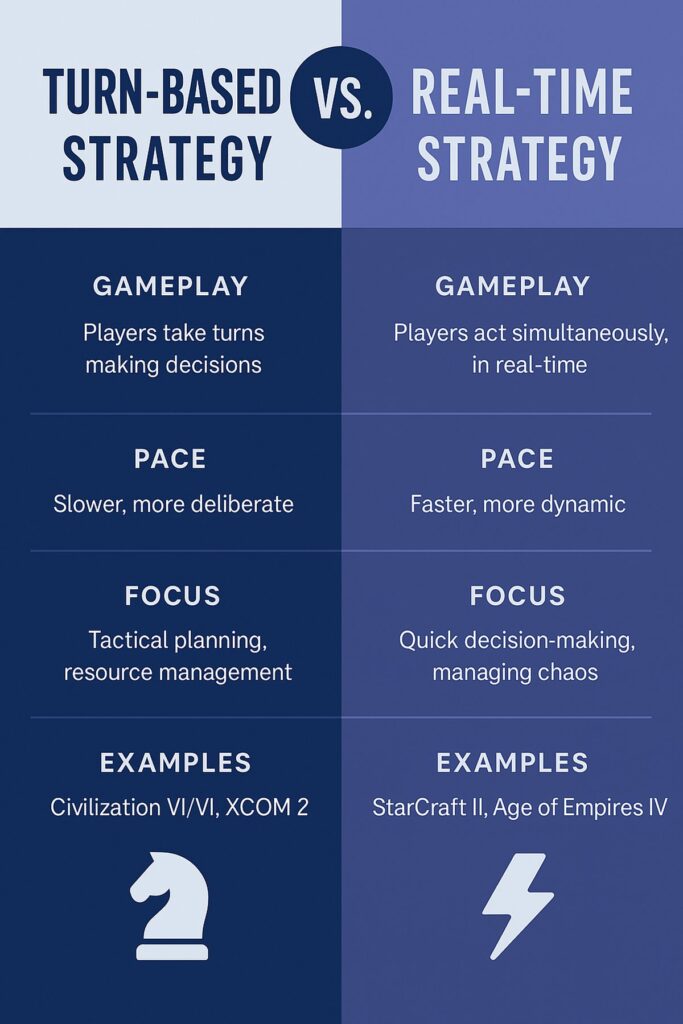
Turn-based strategy (TBS) games are like chess – you make your move, then wait while others take theirs. Nothing happens until you decide to act, giving you all the time you need to think. This creates a methodical gameplay experience where careful planning often trumps quick reflexes. The game state only changes when you commit to an action, letting you fully consider the consequences of each move.
Examples: Civilization VI (and the newer Civilization VII), XCOM 2, Into the Breach
Real-time strategy (RTS) games flow continuously, like a sports match. The action never stops, requiring quick thinking and faster clicks as events unfold around you. These games test your ability to make good decisions under pressure while managing multiple tasks simultaneously. The clock is always ticking, and opportunities can vanish if you hesitate too long.
Chill Place Gaming Store
Take your game further 🎮
Reference sheets, printable guides, and gaming goodies — made by the Chill Place Gaming team to help you play smarter.
Secure checkout
powered by Shopify
Examples: StarCraft II, Age of Empires IV, Company of Heroes 3
Remember our Best Games Under $30 Dollars On Switch (2023) post? The same principles apply here – your personal preference matters more than which style is “better.” Some players thrive under pressure, while others prefer taking their time. Neither approach is inherently superior – they simply offer different gaming experiences.
Key Gameplay Differences
Pace and Timing
In turn-based games, you can take a bathroom break without pausing. The game patiently waits for your next command. This relaxed approach means less stress but potentially longer sessions. Many TBS games even let you save mid-turn, making them perfect for players with unpredictable schedules or those who enjoy thinking through decisions away from the screen.
RTS games keep the clock ticking. That base won’t build itself, and your opponent is already gathering resources while you decide what to do. The constant pressure creates excitement but can feel overwhelming. This urgency forces quick prioritization – do you build more workers, expand your base, or rush out military units? Every second counts, and decisions compound rapidly.
Control Style
Turn-based games let you control every unit with precision. You can see exactly how your actions will play out before committing. This granular control extends to resource management, unit positioning, and long-term planning. The game typically provides clear information about the consequences of your choices, making it easier to learn from mistakes.
Real-time games reward multitasking and quick reactions. You’ll often need to manage multiple groups simultaneously across different areas of the map. The best RTS players develop muscle memory for common tasks, using hotkeys and control groups to command their forces efficiently. This creates a higher mechanical skill ceiling that can be satisfying to master.
A technique called “micro-management” becomes crucial in many RTS games – the ability to control individual units during combat to maximize their effectiveness. Meanwhile, “macro-management” involves keeping your economy running while handling combat situations.
Planning vs. Reacting
TBS games are all about foresight – seeing several moves ahead and executing a master plan. Like our guide on Top 10 Free PC Games with Stunning Graphics, it’s about efficiency and long-term strategy. These games often reward players who set up favorable situations over multiple turns, with satisfaction coming from watching a complex plan unfold successfully.
RTS games balance planning with adaptation. Your beautiful strategy might last exactly 30 seconds before contact with the enemy forces you to improvise. Successful players develop flexible build orders and contingency plans rather than rigid strategies. This creates dynamic gameplay where scouting information becomes critical – knowing what your opponent is doing allows you to counter their strategy before it develops fully.
What Kind of Player Are You?
Understanding your own gaming preferences can help you choose the right strategy style. Your personality, play habits, and even gaming background all influence which approach you’ll likely enjoy more.
You might prefer turn-based if you:
Enjoy thinking deeply before acting. Turn-based games reward careful consideration and methodical planning. If you like weighing all possible options before committing, these games give you space to do so without pressure.
Get stressed by time pressure. Not everyone thrives under the constant demands of real-time gameplay. If you find yourself making mistakes when rushed, turn-based games eliminate that pressure entirely.
Want to control every aspect of gameplay. TBS games typically offer more granular control over individual units and actions. This precision appeals to players who enjoy optimizing every small detail.
- Like strategy board games
- Prefer playing at your own pace
You might prefer real-time if you:
Enjoy multitasking and quick decisions. If you take pride in handling multiple challenges simultaneously, RTS games will test and reward this skill. The satisfaction comes from successfully juggling various tasks while maintaining strategic awareness.
Like the adrenaline of fast-paced gameplay. The rush of making split-second decisions that pay off is a feeling unique to real-time games. That moment when your units flank the enemy perfectly or when you narrowly defend against a surprise attack delivers a special kind of excitement.
Enjoy competitive multiplayer. While both genres offer multiplayer options, RTS games have historically built larger competitive scenes with tournaments and ranked ladders. If you enjoy testing your skills directly against other humans, RTS games often provide more opportunities.
- Have good reflexes and enjoy using them
- Get bored waiting for your turn
Hybrid Games That Combine Both
Can’t decide? Some clever developers have created games that blend both approaches, giving players the best of both worlds. These hybrid titles recognize that the line between turn-based and real-time isn’t always clear-cut.
Total War series stands as perhaps the most successful hybrid formula, combining turn-based empire management with real-time tactical battles. On the campaign map, you’ll carefully plan your nation’s development, diplomacy, and military movements. But when armies clash, you’ll command troops in real-time, making quick decisions about formations and tactics. This combination appeals to players who enjoy both strategic depth and tactical action.
Frozen Synapse pioneered “simultaneous turn-based” gameplay where both players plan their moves independently, then watch them execute simultaneously in real-time. This creates an intriguing mind game where you must anticipate your opponent’s actions while planning your own. The planning phase gives you time to think, while the execution phase delivers the excitement of seeing strategies collide.
Paradox games like Stellaris use a real-time with pause system, letting you stop the game clock whenever needed to issue commands or reconsider your approach. This provides the continuous flow of real-time gameplay with the deliberate decision-making of turn-based strategy. You control the pace, speeding through peaceful periods and slowing down when critical decisions are needed.
Similar to what we covered in Skyrim & Dark Souls Clash: Which Remastered Game Reigns?, these hybrids offer flexible experiences that adapt to different playstyles. Many strategy fans find these hybrid approaches offer the perfect balance, though purists might prefer the clarity of either fully turn-based or fully real-time games.
Pros and Cons
Let’s break down the advantages and disadvantages of each strategy type in an easy-to-scan format:
Turn-Based Strategy
| Pros | Cons |
|---|---|
| Time to think and plan carefully | Games can take many hours to complete |
| Less stressful gameplay | Multiplayer can drag with waiting for others |
| Can be played in short bursts | Sometimes feels slow-paced |
| Often deeper strategic options | Less exciting moment-to-moment gameplay |
| More accessible for strategy newcomers | Can become repetitive in late game phases |
Real-Time Strategy
| Pros | Cons |
|---|---|
| Exciting, dynamic gameplay | Steep learning curve |
| Tests multiple skills simultaneously | Can be stressful and overwhelming |
| Often shorter match times | Requires memorizing hotkeys and build orders |
| Rewarding competitive scene | Less time to appreciate strategy nuances |
| Satisfying to master mechanics | Can feel like a clickspeed contest at high levels |
Best Games to Try First
If you’re new to strategy games or looking to explore the other side of the strategic divide, starting with the right game can make all the difference. These selections offer gentler learning curves while still showcasing what makes each style special.
Turn-Based Starter Games:
Civilization VI remains a gold standard for accessible 4X strategy. Its clear tutorials, friendly advisor system, and intuitive UI make complex empire management approachable. The turn-based structure allows new players to learn at their own pace, while the “one more turn” addictiveness shows why this genre has such dedicated fans. With Civilization VII now available (released in March 2025), newcomers have two excellent entry points – Civ VI offers a complete experience with all expansions, while Civ VII brings exciting new systems but might have a steeper learning curve as a newer release.
Into the Breach offers chess-like precision with simple rules that mask incredible strategic depth. Each mission presents a puzzle-like scenario where you can see enemy intentions before acting. With quick missions and minimal randomness, it teaches core turn-based principles without overwhelming new players. Its design brilliantly demonstrates how turn-based games can create tense situations without time pressure.
Mario + Rabbids: Sparks of Hope – Colorful, approachable tactical gameplay with familiar characters and forgiving mechanics
Real-Time Starter Games:
Age of Empires II: Definitive Edition combines classic RTS design with modern improvements and an excellent tutorial campaign. Its moderate pace gives new players time to grasp fundamentals before facing serious challenges. The clear resource systems and distinctive civilizations make it easy to understand cause and effect in your strategic decisions. The remastered graphics keep this classic accessible to modern gamers.
Northgard takes a refreshingly different approach to RTS with its slower pace and clear objectives. The Norse-themed strategy game limits micromanagement by restricting how many units you control, letting new players focus on broader strategy rather than rapid clicking. Its survival elements provide natural goals that guide learning without overwhelming with options.
They Are Billions – Single-player focus removes multiplayer pressure while teaching core RTS concepts through zombie survival scenarios
Check out our Best Multiplayer Free PC Games in 2023 post for more detailed recommendations and tips for getting started with each title. We’ve included specific advice for controller players and those new to PC gaming.
Final Thoughts
There’s no “better” option here – just different flavors for different players. Many strategy fans enjoy both styles depending on their mood, available time, and the specific game.
Ready to dive deeper? Take our Game On: Our Top Picks for the Best Xbox Games under $25 article to get personalized game recommendations!
FAQ: Quick Answers to Common Questions
What’s the difference between turn-based and real-time strategy?
Turn-based games pause while you decide your next move, while real-time games continue running regardless of whether you’re actively making decisions. Turn-based games like Civilization give you unlimited time to plan each action, while real-time games like StarCraft require quick thinking and reactions as events unfold continuously.
Are turn-based games better for beginners?
Generally yes. The relaxed pace gives newcomers time to learn systems without pressure, though some real-time games have excellent tutorials and campaign modes that ease you in. Turn-based games like Civilization VII or Into the Breach allow you to take your time understanding game mechanics, while beginner-friendly RTS games like Age of Empires II: Definitive Edition offer comprehensive tutorials.
Can I enjoy both types of strategy games?
Absolutely! Many strategy fans switch between styles based on their mood or the specific game’s appeal. Each type offers different experiences – turn-based for thoughtful planning and real-time for dynamic action. Hybrid games like Total War combine elements of both approaches.
What if I want the best of both worlds?
Try hybrid games like the Total War series, Frozen Synapse, or real-time-with-pause games like Stellaris that blend elements from both approaches. Total War offers turn-based campaign management with real-time battles, while Paradox games like Stellaris let you pause at any time to issue commands, combining real-time flow with thoughtful decision-making.
Which style has more depth?
Both can be incredibly deep. Turn-based games often have more complex systems since players have time to engage with them, while real-time games test different strategic skills like prioritization and execution. Games like Civilization VII offer deep diplomatic, economic, and cultural systems, while StarCraft II rewards mastery of unit control, resource management, and quick strategic adaptation.


