
As an Amazon Associate I earn from qualifying purchases and sometimes recommend products from other sellers at no extra cost you. For more details see my disclosure policy and privacy policy.
Starting your first city in Cities: Skylines II can feel overwhelming with all the options and systems. This guide will walk you through the essential first steps to establish a thriving metropolis without the frustration of early bankruptcy or unhappy citizens.
Choosing Your Map
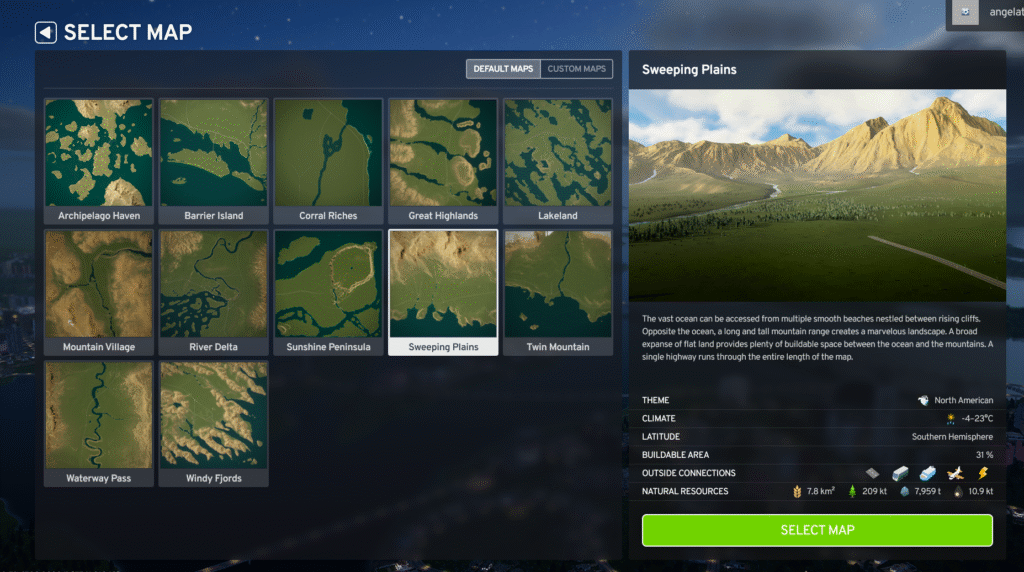
The first decision you’ll make is selecting your starting map. Each map offers a unique blend of challenges and opportunities that will shape your city-building experience. Terrain features can create natural boundaries, while available resources influence your industrial development. Your starting budget and climate conditions will also affect your early game strategy.
Beginner recommendation: Start with a relatively flat map with good water access and multiple highway connections. Maps like “Sweeping Plains” or “Great Highlands” provide gentle learning curves with fewer natural obstacles. These starter-friendly maps let you focus on core mechanics without wrestling with difficult terrain or limited resources.
Initial Road Layout
Roads are the backbone of your city. A well-planned road network will support growth for generations to come, while poor planning leads to traffic nightmares. Your first roads establish patterns that can be difficult to change later, so take your time with this crucial step.
Chill Place Gaming Store
Take your game further 🎮
Reference sheets, printable guides, and gaming goodies — made by the Chill Place Gaming team to help you play smarter.
Secure checkout
powered by Shopify
Start with a simple grid pattern extending from the highway connection. Use two-lane roads for residential areas and four-lane roads for your main arteries. Always leave generous space between major roads for future expansion and service buildings. This forethought will save you from costly demolition projects later.
Think of your road network as a tree – begin with the trunk (highway connection), add major branches (arterial roads), then fill in with smaller roads as needed. This organic approach allows your city to grow naturally while maintaining good traffic flow.
Zoning Your First Districts
Proper zoning balance is crucial for early success:
- Residential (green): Start by zoning small pockets of residential areas near your highway entrance
- Commercial (blue): Place small commercial zones along your main roads adjacent to residential areas
- Industrial (yellow): Keep industrial zones separate from residential areas to avoid pollution issues
A good starting ratio is 1:1:1 – balance your residential, commercial, and industrial zones to ensure steady growth and minimize vacant buildings.
Essential Services
Don’t forget the basic services your citizens need from day one. Your new residents won’t stick around long without access to utilities and basic care.
Water infrastructure forms the foundation of your city. Place a water pump near a clean water source and install a water tower as backup. Make sure to run pipes under all zoned areas, and remember that pumps must be placed upstream of sewage outlets to avoid contamination.
Power generation should start small and clean. A modest wind farm or solar plant provides affordable energy without pollution concerns. Connect your power grid to all developed areas, and keep an eye on capacity as your city grows.
Garbage, healthcare, and education round out your essential services. Add a landfill site away from residential areas to keep property values up. A small clinic will handle initial healthcare needs for your first few neighborhoods. Once families move in, an elementary school should be your first educational investment to boost land value and develop an educated workforce.

Managing Your Budget
Money management is critical in your first hours of gameplay:
- Start with essential services only
- Use loans sparingly and only for revenue-generating investments
- Watch your weekly income/expense balance in the budget panel
- Adjust tax rates (12% is generally optimal) once your city reaches around 500 citizens
- Don’t expand too quickly – patience saves money!
Transportation Beyond Roads
As your city grows beyond a few thousand citizens, you’ll need more than just roads to keep traffic flowing smoothly. Public transportation becomes essential for sustainable growth and happy citizens.
Bus lines offer your first affordable mass transit option. Create simple routes connecting residential areas to commercial and industrial zones, with stops placed at key intersections. Start with just 2-3 bus lines that follow major thoroughfares, adding more as demand increases.
Bike paths provide an excellent complement to traditional transit. These affordable lanes reduce road traffic while promoting citizen health. Strategically connecting residential areas to workplaces with bike infrastructure can significantly cut down on car usage.
Don’t overlook the humble sidewalk and pedestrian pathway. When neighborhoods are properly connected with walking routes, many citizens will choose to travel by foot for short trips. This natural movement reduces traffic and builds community in your growing city.
Tips for Smoother Growth
- Watch service coverage: Check that water pipes and power lines reach all buildings
- Monitor citizen happiness: Address complaints quickly before they snowball
- Use districts: Create specialized districts to better manage policies and services
- Plan for expansion: Leave room for growth in your initial layout
- Pause for planning: Don’t hesitate to pause the game to think through larger decisions
Common Mistakes to Avoid
New mayors often fall into predictable traps that can stall city growth or create problems that haunt them for generations. Building too much too quickly drains your treasury and creates maintenance burdens before you have the tax base to support them. Start small and grow organically with demand.
Pollution management requires constant attention in your early city. Placing industrial zones or waste facilities near homes will quickly drive down land values and create health problems. Always use natural buffers or commercial zones as transitions between polluting and residential areas.
Traffic bottlenecks can bring your city to a standstill if left unchecked. Pay special attention to highway connections, bridges, and major intersections where congestion forms first. Adding capacity before gridlock occurs is far easier than fixing problems after they develop.
Service expansion timing also trips up many new players. Waiting too long to add police, fire, or healthcare facilities can lead to crime waves, devastating fires, or health crises. Monitor service coverage maps regularly and add facilities before problems emerge.
Next Steps
Once your city reaches about 5,000 citizens and shows stable growth, you can explore more advanced features like:
- Specialized industry zones
- Public transportation networks
- Parks and recreation areas
- Universities and advanced healthcare
- Unique buildings and monuments
For more advanced strategies and optimization tips, check out our City Building Excellence: Tips for Cities: Skylines II guide.
Remember that a great city isn’t built in a day – Cities: Skylines II rewards patience and thoughtful planning. Start small, build a solid foundation, and watch your metropolis thrive!
First 10 Steps Checklist
For a quick reference guide to starting your first city, follow these steps in order:
- Connect to the Highway – Create an efficient entrance/exit point
- Establish Your Main Road Grid – Lay out arterial and residential roads
- Set Up Basic Utilities – Place water pumps, pipes, and power sources
- Create Your First Residential Zone – Start with 8-10 blocks near the highway
- Add Commercial Zones – Place along main roads adjacent to homes
- Establish Industrial Areas – Separate from residential but near highways
- Place Essential Services – Add clinic, police, fire, landfill, and school
- Implement Basic Policies – Enable starter policies like Small Business Enthusiast
- Create Your First Bus Line – Connect residential areas to jobs and shopping
- Expand Strategically – Grow methodically while maintaining budget balance
Troubleshooting Common Issues
Even carefully planned cities encounter problems. Here are solutions to the most common issues:
“Not Enough Buyers for Products”
Your industrial buildings need customers for their goods. Add more commercial zones, improve road connections between industrial and commercial areas, and ensure highway access for exports.
“Not Enough Workers”
Buildings need appropriately educated citizens who can reach them. Check education levels needed by your industries, add bus routes between homes and workplaces, and improve land value in residential areas.
“Not Enough Goods to Sell”
Commercial buildings need stock. Add more industrial zones, improve traffic flow for deliveries, and ensure good highway connections for imports.
Persistent Traffic Jams
Implement proper road hierarchy (local → collector → arterial → highway), upgrade key intersections to roundabouts, add public transportation, and use the traffic routes overlay to identify bottlenecks.
Budget Crisis
Temporarily reduce funding for services to 85-90%, demolish redundant buildings, ensure service buildings operate at near capacity, and consider slight tax increases (stay under 13%).
Building Abandonment
Check the building info panel for specific abandonment reasons, review policies that might be affecting certain industries, and ensure all essential services reach your zones.
For detailed troubleshooting of other common issues, visit our full Cities: Skylines II Troubleshooting Guide (coming soon).
Stop Fighting Traffic.
Start Designing It.
Get the CS2 Road & Junction Toolkit, 11 decision tools for diagnosing jams, picking the right junction, and fixing your city's traffic for good.
- ✓Road hierarchy rules and the 5 mistakes that break them
- ✓A junction selection cheat sheet and a diagnostic flowchart
- ✓A full worked example, before and after


